
Observe ordinary use without forcing the mechanism
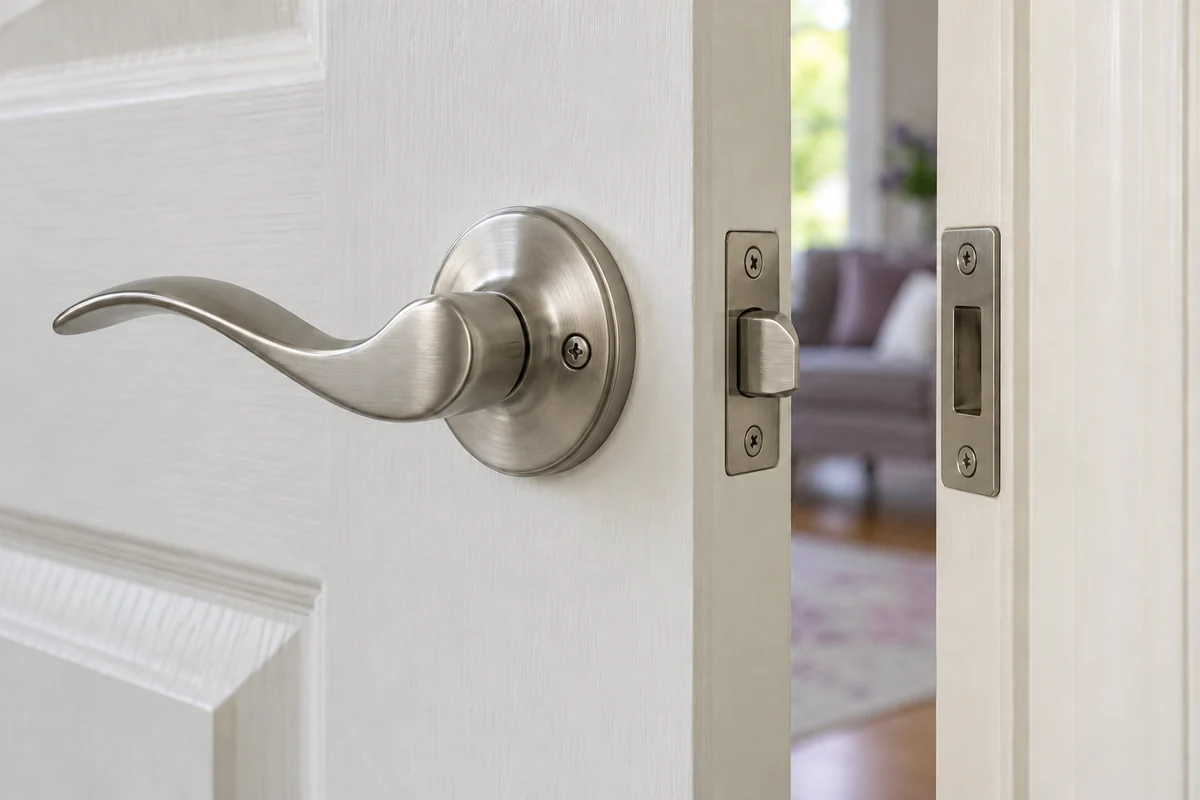
Does the key turn easily until the door is closed? Does the handle feel loose, or does the bolt stop partway? Say when the behavior began and whether it is constant or occasional. An accurate description is more useful than guessing a replacement part.
Avoid pulling harder on a damaged key, slamming the door or repeating a difficult action just to demonstrate it. If you cannot get in, discuss emergency locksmith availability. If the door cannot be secured, say that at the beginning of the call.
The lock is part of a door and frame. Assessment may need to consider how those parts meet as well as the cylinder itself. Ask what has been found and how the proposed work addresses the symptom before authorizing a repair.